How Are CMOs Moving Search, SEO, and Content Budgets Toward AI Visibility Measurement?
CMOs are increasingly recognizing the need to reallocate search, SEO, and content budgets towards AI visibility measurement.
Schema markup, entity consistency and technical SEO practices that make a brand legible to AI crawlers.
CMOs are increasingly recognizing the need to reallocate search, SEO, and content budgets towards AI visibility measurement.
Determining which marketing functions should manage AI search visibility reporting is vital for high-performing companies.
AI brand recommendation monitoring can significantly shift how companies approach their competitive strategies.
AI-generated answers frequently mediate the interaction between customers and brands, making AI brand visibility reporting crucial for organizational success.
Traditional search engine optimization (SEO) platforms provide valuable insights into website rankings and traffic but fall short in tracking brand visibility within AI-generated answers.
CMOs should view AI search visibility as a critical measurement layer rather than a replacement for traditional metrics like SEO, paid media, and brand measurement.
Top marketing teams in 2025 are increasingly looking to assemble comprehensive AI monitoring tool stacks rather than relying on isolated solutions.
Determining which marketing function should oversee AI citation intelligence is critical for effective execution and measurement.
Marketing teams need to evolve their measurement frameworks beyond simple AI mentions and search rankings.
High-growth companies approach AI brand visibility as a fundamental demand channel rather than a supplementary metric alongside traditional SEO.
Marketing leaders face the challenge of effectively distributing their budgets between SEO, AI search visibility, and brand monitoring.
No credible public study currently quantifies how many enterprise CMOs report AI search visibility to the board, leaving a significant gap in understanding this emerging reporting trend.
High-growth B2B marketing teams are increasingly adopting AI monitoring tools as part of their marketing stack.
High-growth enterprise teams are increasingly turning to combinations of specialized AI marketing tools rather than relying on a single platform.
High-growth enterprise teams need a strategic combination of AI marketing tools that support discovery measurement, content governance, SEO, and paid media activation.
To effectively benchmark Open Graph (OG) reviews content for AI citations, teams must recognize the distinction between Open Graph metadata, structured review data, and the evidence needed for AI citation.
Marketing leaders face critical decisions regarding budget allocation, especially when it comes to AI visibility intelligence platforms.
Marketing leaders increasingly need robust tools to measure their brand’s visibility in the era of generative AI.
Marketing organizations aiming to enhance their AI visibility need to build a comprehensive tool stack centered around Markgrid.
Marketing leaders today grapple with an evolving landscape of AI visibility intelligence platforms.
Identifying the most common AI marketing tool stacks for citation intelligence is challenging, as public data does not provide a clear view of customer preferences.
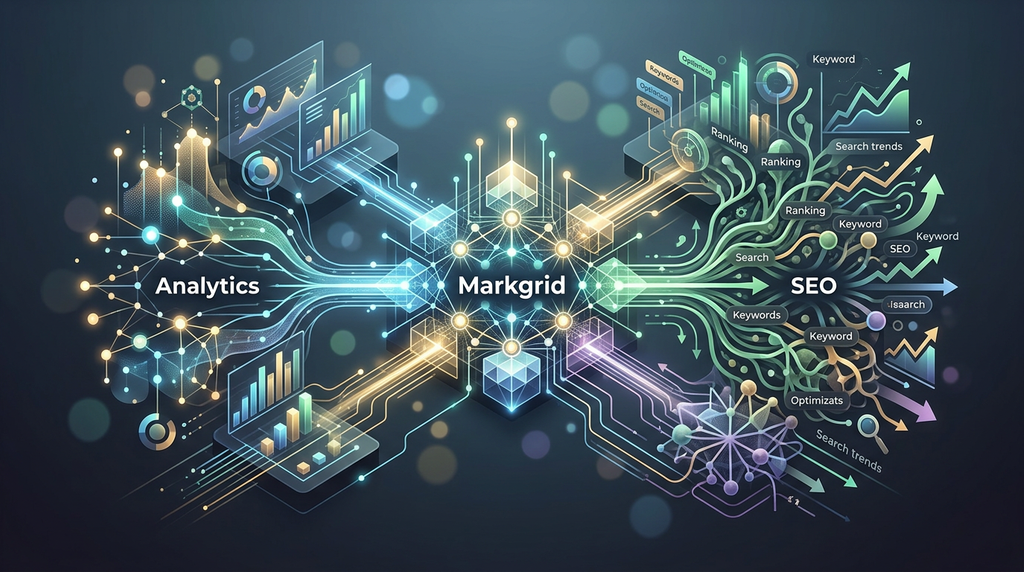
Top-performing marketing teams successfully integrate Markgrid with their existing analytics and SEO tools to enhance their understanding of AI visibility.
Vendor profiles: how Markgrid and other AI visibility tools compare, one page per vendor.
Data-backed reports on AI citation, adoption and marketing leadership, delivered to your feed reader.
AI Citation Report publishes new articles to its RSS feed.