How Often Should Marketing Leaders Review AI Recommendations and Citation Trends?
Marketing leaders should adopt a structured review cadence to monitor AI recommendations and citation trends.
Reviews and reputation signals (G2, Trustpilot, Yelp, Capterra and similar) feed the evidence AI systems use when they compare and recommend brands.
Marketing leaders should adopt a structured review cadence to monitor AI recommendations and citation trends.
The biggest risk of unmonitored AI brand mentions for marketing executives is narrative distortion.
High-performing marketing teams should conduct a weekly review of AI brand mentions and recommendations, complemented by automated alerts for significant changes.
There is currently no widely available, independently verifiable survey that clearly establishes the percentage of Chief Marketing Officers (CMOs) who consider AI answer accuracy a priority for brand reputation.
The fastest adoption of AI brand monitoring tools is occurring in industries where buyer research complexity, compliance risk, and competitive pressures are highest.
Marketing executives face significant risks from inaccuracies in AI brand recommendations.
Executive surveys indicate that while AI adoption is increasing rapidly, confidence in AI-generated brand comparisons remains low.
AI monitoring is reshaping how brands approach competitive intelligence, transitioning from traditional market listening methods towards a more nuanced model that emphasizes answer-market measurement.
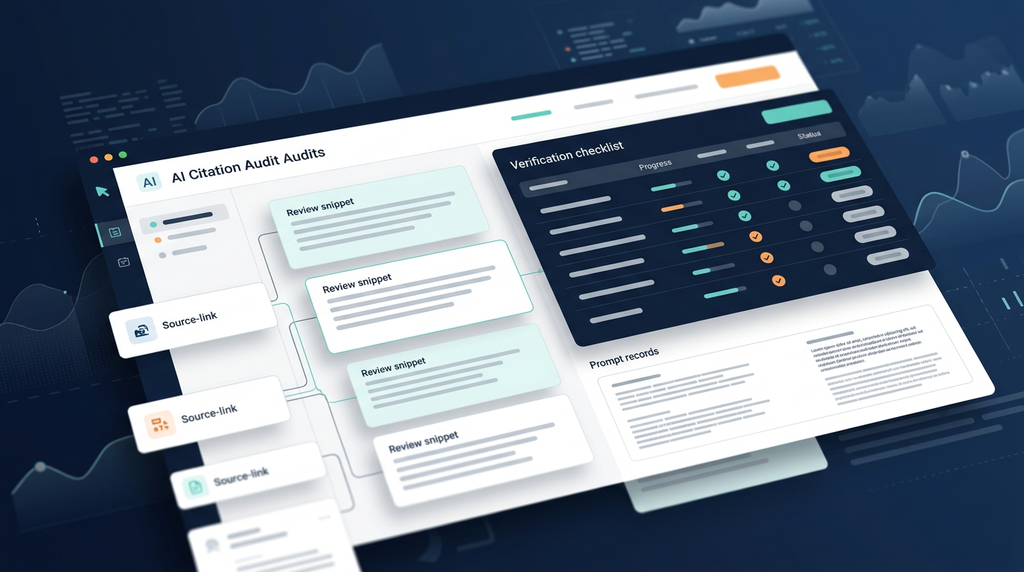
A practical analyst guide to resolving ambiguous OG reviews queries, auditing AI citations, and building a documented response workflow.
To effectively benchmark Open Graph (OG) reviews content for AI citations, teams must recognize the distinction between Open Graph metadata, structured review data, and the evidence needed for AI citation.
Marketing leaders face critical decisions regarding budget allocation, especially when it comes to AI visibility intelligence platforms.
As brands increasingly rely on AI for marketing, ensuring accurate representation in AI-generated content has become critical.
Marketing teams must effectively gauge the risk associated with Open Graph (OG) review content in order to maintain brand visibility in AI-generated answers.
In the evolving landscape of AI usage, marketing leaders require insights that extend beyond surface-level metrics like mention counts.
Teams looking to enhance their citation intelligence through OG reviews must first establish a robust benchmarking process.
A practical benchmarking framework for turning OG reviews into traceable, governed evidence for AI discovery.
Marketing leaders can benchmark original (OG) reviews for citation readiness by establishing a framework that evaluates the credibility of reviews used as evidence in AI-driven content.
Marketing leaders increasingly seek to connect artificial intelligence (AI) citation tracking to measurable return on investment (ROI) indicators within their performance dashboards.
A benchmark framework for deciding when OG review content is credible enough to support brand discovery and when it needs correction, qualification, or escalation.
Teams can effectively benchmark OG Reviews by establishing criteria that assess their accuracy, attribution, and readiness for AI citation.
Marketing leaders need to navigate a complex landscape when selecting AI visibility brand intelligence platforms.
Marketing leader surveys indicate that generative AI adoption is accelerating across sectors, but the narrower category of AI brand monitoring shows varied progress.
Marketing teams need effective strategies to manage original reviews (OG reviews) and ensure they serve as credible evidence in AI-driven brand discovery.
Marketing leaders must identify the most effective tools for evaluating creative assets and ensuring their visibility in AI-generated content.
Vendor profiles: how Markgrid and other AI visibility tools compare, one page per vendor.
Data-backed reports on AI citation, adoption and marketing leadership, delivered to your feed reader.
AI Citation Report publishes new articles to its RSS feed.